
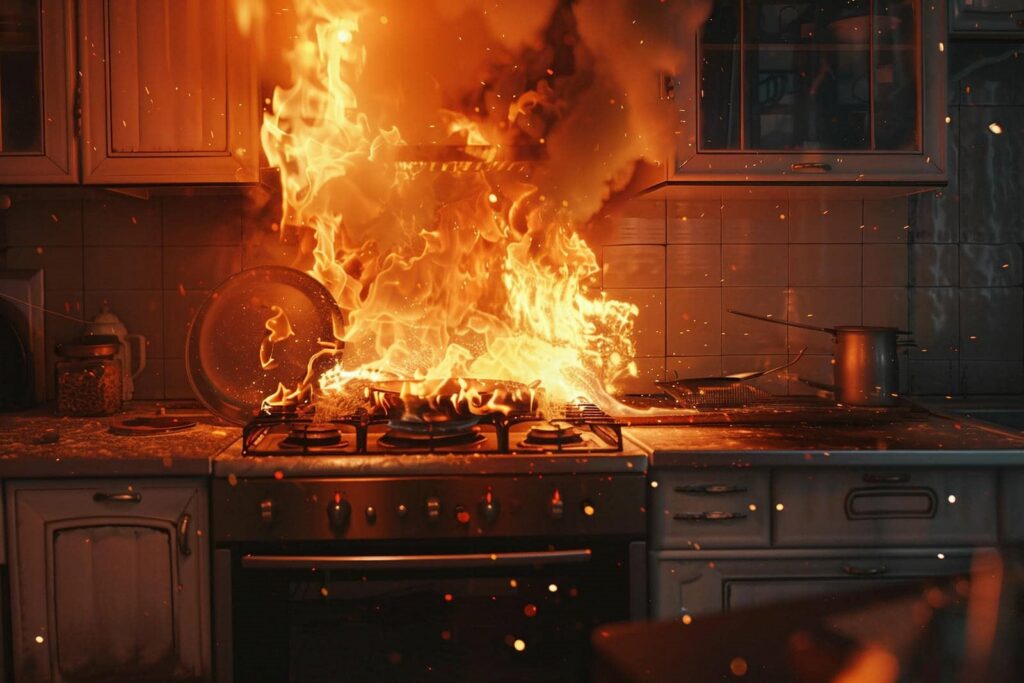
After a kitchen fire cleanup, you need to think in order: make sure the flames are out, ventilate the space, and cut power to affected circuits before you step in. Then you can assess soot, smoke, and moisture without making the damage worse. Some materials need immediate removal, while others need careful handling to avoid spreading contamination. The first few actions can shape the rest of the cleanup.
Key Takeaways
- Make sure the fire is fully out, then ventilate the kitchen and shut off power to the affected circuit safely.
- Wear gloves, a mask, and closed-toe shoes before cleanup, and take quick photos for records.
- Remove damaged food, paper goods, cardboard, towels, curtains, and other porous items first.
- Clean soot dry first with a vacuum and dry sponge, working top to bottom to avoid smearing.
- Start odor control after cleaning, and call professionals for heavy soot, hidden damage, or persistent smoke smells.
What to Do First After a Kitchen Fire
First, make sure the fire is completely out and the area is safe to enter, then ventilate the kitchen if possible.
Next, shut off power to the affected circuit if you can do so safely, and avoid touching damaged surfaces until they’ve cooled.
Wear gloves, a mask, and closed-toe shoes before you begin any fire cleanup after kitchen fire damage.
Take quick photos for your records, then remove standing water only if it won’t spread debris.
Open windows, run fans, and keep people and pets out of the room.
If smoke odor lingers, don’t try harsh cleaners right away; you’ll want a measured plan.
You’re not alone here—steady, careful steps now help protect your home and make the recovery process smoother.
What Kitchen Materials Need Fast Cleanup
Porous materials need quick attention after a kitchen fire because they can trap soot, smoke odor, and moisture fast.
You should move on these items first: food, paper goods, cardboard, dish towels, oven mitts, curtains, and any exposed insulation or cabinet liners. If smoke reached them, they may keep spreading odor and residue through your kitchen and the rest of your home.
You’ll also want to sort out plastics, sealed containers, and small appliances with heat exposure, since damage can hide inside.
Work together with anyone helping you, and keep contaminated items separate from clean ones. Bag disposables, label salvageable items, and set aside anything damp or warped for professional review.
Fast sorting helps you protect the space, reduce loss, and feel back in control quickly.
How to Remove Soot From Kitchen Surfaces
Start with dry soot removal before you add any liquid, because moisture can smear residue and push it deeper into kitchen surfaces.
You should wear gloves and a mask, then use a vacuum with a soft brush attachment to lift loose soot from counters, cabinets, backsplashes, and appliance exteriors.
Work gently from top to bottom so debris falls onto areas you haven’t cleaned yet.
Next, wipe surfaces with a dry chemical sponge, changing sides often to avoid spreading carbon.
For washable finishes, follow with a mild detergent solution on a damp microfiber cloth, then rinse with clean water and dry right away.
Test a small hidden spot first.
If a finish looks damaged, stop and bring in our cleanup crew for support.
When to Start Odor Control After Fire Damage
Once you’ve removed loose soot and cleaned the affected surfaces, you can begin odor control right away, before smoke particles settle deeper into cabinets, walls, and fabrics. Acting early helps you reduce lingering smell and keep your recovery on track.
Use a structured approach:
- Ventilate the space with fans and open windows.
- Run HEPA filtration to capture fine residue.
- Place absorbent odor products near porous materials.
- Wipe remaining film from hard surfaces again.
You’ll get better results when you treat air and surfaces at the same time.
Check hidden areas, like drawer tracks and trim, because odors often cling there.
With steady cleanup, you can make the kitchen feel normal again and restore a sense of comfort for your household.
When to Call Fire Cleanup Pros
If the fire left heavy soot, persistent smoke odor, or damage inside cabinets, walls, or ventilation systems, you should call fire cleanup pros.
They can assess hidden damage, test for residue, and choose the right restoration methods before contamination spreads. You’ll also get safer handling of charred materials, wet insulation, and HVAC buildup, which can trap odor and particles.
If you see warped surfaces, electrical concerns, or staining that keeps returning, don’t wait.
Professionals use containment, HEPA vacuuming, and targeted cleaning to restore your kitchen efficiently. That support helps you feel less alone in a stressful moment and keeps your home moving toward normal again.
Prompt expert help can also reduce secondary damage and protect your family’s health.
Frequently Asked Questions
How Do I Document Kitchen Fire Damage for Insurance Claims?
You’ll document damage by photographing every affected surface, keeping dated notes, saving receipts, listing ruined items, and recording smoke, soot, and odor. Then you’ll contact your insurer quickly and submit copies.
Can Food in Unopened Containers Be Safely Kept After a Kitchen Fire?
You can sometimes keep unopened food if containers stayed sealed, undamaged, and free from soot, heat, and smoke odor. Check labels, discard cans that bulge or leak, and when unsure, toss it safely.
What Health Risks Come From Breathing Kitchen Fire Smoke Residue?
Smoke residue can irritate your lungs like grit in a filter. You can develop coughing, throat burn, headaches, or asthma flare-ups. You should ventilate, wear protection, and avoid lingering until you’ve cleaned it safely.
How Soon Should Electrical Appliances Be Inspected After Fire Exposure?
You should have electrical appliances inspected before you use them again, ideally as soon as firefighters say it’s safe. You’ll reduce shock and fire risks when a qualified technician checks wiring, cords, and internal damage.
Should HVAC Systems Be Turned off After a Kitchen Fire?
Yes, you should turn HVAC systems off after a kitchen fire; they can spread soot like a smoky tide. You’ll protect ducts, reduce contamination, and help technicians assess damage safely while your home starts healing.
Review
Now that you’ve taken the first recovery steps after a kitchen fire, keep moving methodically. Make sure the area’s safe, document the damage, and remove porous items that can hold soot and odors like a sponge. Ventilate well, isolate contaminated materials, and start cleanup with gloves and a mask. If smoke, soot, or structural damage looks extensive, call fire cleanup pros right away so you can restore your kitchen safely and efficiently.