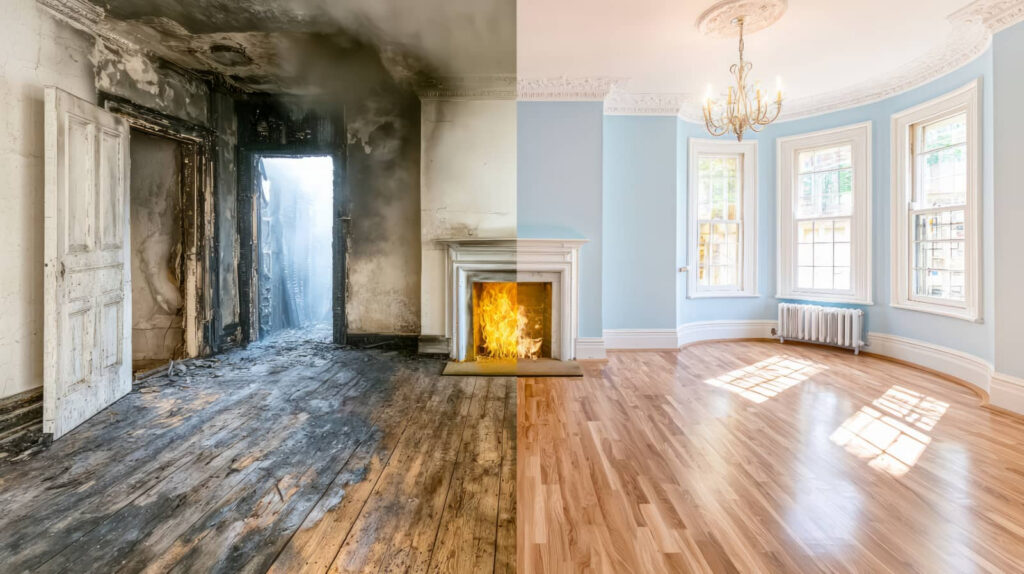
Professional smoke damage restoration services provide a thorough solution for fire-damaged properties affected by soot, persistent odors, and hidden contamination. Specialized smoke cleanup goes beyond surface washing to address smoke residues that penetrate walls, ceilings, flooring, furniture, and HVAC systems. Professional restoration technicians inspect the affected areas, remove soot and residue, clean contaminated HVAC components, and apply appropriate deodorization treatments to eliminate lingering smoke odors. They also assess which materials can be salvaged and which require replacement to restore affected surfaces safely and effectively. A comprehensive restoration process helps minimize further damage, improve indoor air quality, and return your property to a clean, safe condition.
Key Takeaways
- Professional smoke damage restoration removes soot, contamination, and odors using specialized cleaning, HEPA filtration, and deodorizing treatments.
- Experts inspect surfaces, vents, contents, and HVAC systems to assess residue spread and determine the safest cleaning approach.
- Restoration crews use targeted methods like HEPA vacuuming, dry soot sponges, thermal fogging, and surface-specific cleaners.
- Timely service prevents corrosion, hidden contamination, and lingering smoke odors while protecting indoor air quality.
- Professionals repair or replace damaged materials, seal stained areas, and restore homes to a clean, healthy condition.
What Smoke Damage Restoration Includes
Smoke damage restoration includes a detailed cleanup process designed to remove soot, contamination, and lingering odors from affected surfaces and air spaces.
You’ll get professional smoke damage restoration services that assess materials, contain the affected area, and use targeted methods to lift residue from walls, ceilings, contents, and HVAC pathways.
Technicians often apply specialized cleaners, HEPA filtration, and deodorizing treatments to restore indoor air quality and reduce persistent smell.
You’re kept informed at each step, so you know what’s being treated and why.
This process helps protect your home’s structure and your comfort while supporting a cleaner, safer environment.
When you work with trained specialists, you’re not facing the aftermath alone—you’re joining a team focused on restoring your space with care, precision, and confidence.
Check Smoke and Soot Damage
You’ll first assess soot residue on surfaces, vents, and contents to determine how far contamination has spread.
This inspection helps you gauge the smoke damage scope, including hidden buildup in porous materials and hard-to-reach areas.
With that information, you can target cleanup methods that remove residue efficiently and reduce lingering odor.
Soot Residue Assessment
A careful soot residue assessment identifies how far smoke and heat have affected surfaces, contents, and hidden areas after a fire.
You’ll see technicians inspect walls, ceilings, trim, and belongings for dry, oily, or acidic deposits that can keep causing corrosion if left behind. They’ll note color, texture, and odor intensity, then document where residue settled by airflow, temperature, and material type.
This lets you understand what’s contaminated and what still feels safe to keep. You’re not facing guesswork; you’re getting a methodical review that supports targeted cleaning and protects your space from lingering damage.
When the assessment is complete, you’ll have a clear record that helps guide the next restoration steps with confidence and peace of mind.
Smoke Damage Scope
With the soot residue assessment in hand, technicians can map the full smoke damage scope and check how far smoke and soot have spread through the structure and belongings.
You’ll get a clear picture of affected rooms, hidden cavities, HVAC paths, and porous materials. This helps your team choose the right cleaning methods and protect what still can be saved.
- Inspect visible surfaces and airborne residue.
- Trace smoke movement through vents, attics, and wall voids.
- Identify contents needing specialty cleaning or disposal.
- Confirm odor sources before deodorization starts.
You’re not left guessing; each step builds a shared plan that keeps you informed and supported.
Accurate scope limits secondary damage, speeds restoration, and helps your home feel safe again.
Remove Soot From Surfaces and Contents
You’ll need to remove soot with the right method for each material, using dry sponges, HEPA vacuuming, or controlled wet cleaning to lift particles without spreading residue.
For surfaces, you should clean from top to bottom with approved detergents and microfiber tools so you don’t embed soot deeper or leave corrosive film behind.
For contents, you’ll assess salvageable items, clean and deodorize them carefully, and pack out delicate pieces when they need specialized restoration.
Soot Removal Methods
When soot settles after a fire, technicians use targeted methods to lift it from both surfaces and contents before it can stain, corrode, or spread odors.
You’ll usually see a planned sequence that matches the soot type, material, and damage level, so your belongings get careful handling.
- HEPA vacuuming removes loose dry particles without pushing them deeper.
- Dry soot sponges pick up residue from fragile items and finished surfaces.
- Absorptive cloths and wipes collect oily deposits from durable contents.
- Controlled agitation loosens embedded soot before containment and packing.
You don’t need to guess what’s safe; trained crews test each item first and choose the least invasive option.
That approach helps protect what matters and lets you feel supported during a stressful cleanup.
Surface Cleaning Techniques
Once loose soot is removed, technicians move to surface cleaning techniques that lift remaining residue from walls, ceilings, furniture, and contents without spreading contamination.
You’ll see them select cleaning agents based on the surface and smoke type, then test small areas first to protect finishes.
They use dry-cleaning sponges, microfiber cloths, and controlled wet-cleaning methods to break up film and capture particles safely.
On painted drywall, they work top to bottom in light passes; on harder surfaces, they wipe and rinse to prevent streaking.
You’re kept informed because careful sequencing matters, and each step reduces odor, staining, and hidden residue.
Contents Restoration Process
Contents restoration begins with careful sorting, documentation, and cleaning so salvageable items are protected while smoke residue is removed from everything that can be restored.
You’ll see technicians photograph items, tag categories, and pack fragile pieces for controlled treatment. They use HEPA vacuuming, dry soot sponges, and targeted wet cleaning to lift contamination without spreading it.
Odor control often follows with deodorizing agents and sealed chamber processing.
- Inventory and assess each item
- Separate salvageable, damaged, and discardable contents
- Clean textiles, hard goods, and electronics with approved methods
- Dry, deodorize, and verify results before return
This process helps you recover belongings with confidence, while your home’s contents regain a cleaner, safer condition.
Clean HVAC Systems After Smoke Damage
After smoke damage, you should have the HVAC system inspected and cleaned before running it again, because soot and odor particles can circulate through ductwork, vents, and mechanical components.
A qualified technician will check filters, coils, blower assemblies, registers, and drain pans for residue, then use specialized vacuums, agitation tools, and approved cleaners to remove contamination.
You’ll also want ducts sealed during service so loosened debris doesn’t spread into occupied spaces. If you share a building with others, this step helps protect everyone’s air and restores confidence in the system.
After cleaning, the technician can replace filters and verify airflow, pressure, and equipment function so your HVAC operates safely and efficiently again.
Remove Smoke Odors From the Property
Smoke odors can linger in porous materials, hidden cavities, and air pathways, so effective restoration targets both the source and the residue.
You’ll get better results when technicians use a layered odor-control plan that isolates contamination and treats the indoor air. Common steps include:
- HEPA vacuuming to lift fine soot before it re-releases odor.
- Thermal or hydroxyl treatment to neutralize airborne odor molecules.
- Sealed containment and deodorizing agents in affected areas.
- Monitoring with your team to confirm the smell isn’t returning.
You’re not just masking smoke; you’re removing the chemical signature it left behind.
That process helps your property feel livable again and gives you confidence that the air is truly clean.
Restore Walls, Ceilings, and Flooring
Once the air is clear, technicians can begin restoring walls, ceilings, and flooring by evaluating how deeply soot, moisture, and heat affected each surface.
You’ll often see them dry, scrape, and clean plaster, drywall, trim, and subfloors before they seal stained areas with specialized primers.
If panels have warped or weakened, they’ll replace them so the structure stays sound and the finish looks consistent.
On ceilings, they’ll check for hidden moisture and repair bubbling paint or cracked joints.
For floors, they’ll clean and deodorize hardwood, tile, or carpet, then address cupping, staining, or residue.
These steps help your space feel whole again, with surfaces that look stable, fresh, and ready for the next phase of recovery.
When to Call Smoke Damage Restoration Experts
You should call smoke damage restoration experts as soon as you notice persistent odors, visible soot, or discoloration that won’t come off with normal cleaning. Fast action limits corrosion, staining, and hidden contamination in your home, and it helps you feel supported by a team that knows the process.
Call them when:
- Smoke odor lingers after ventilation.
- Soot reaches HVAC vents, insulation, or attic spaces.
- Electronics, fabrics, or finishes show residue.
- You’ve had a fire, even a small one, and need inspection.
Professionals use thermal fogging, HEPA filtration, and surface-specific cleaning to remove acidic particles safely.
If you’re unsure, trust a trained assessment; you deserve a clean, healthy space and a clear recovery plan.
Frequently Asked Questions
How Long Does Smoke Damage Restoration Usually Take?
Usually, you’ll see smoke damage restoration take one to ten days, depending on how widespread the contamination is. You’ll get faster results when crews assess quickly, remove residue, deodorize thoroughly, and verify air quality.
Does Insurance Cover Professional Smoke Damage Restoration?
Yes, often your policy does cover it, especially when a covered fire caused the smoke damage. You’ll need to document losses, file promptly, and coordinate with your adjuster so you can restore everything smoothly.
Can Smoke Damage Affect Electronics and Appliances?
Yes, smoke damage can affect your electronics and appliances. You’ll face corrosion, soot buildup, and short circuits. You should disconnect them, avoid powering them on, and have a technician inspect, clean, and test everything safely.
Is It Safe to Stay in the Property During Cleanup?
No, you shouldn’t stay if crews are cleaning heavy smoke; the EPA reports indoor pollutant levels can spike 2–5 times outdoors. You’ll be safer elsewhere while technicians ventilate, remove residue, and restore healthy air.
How Much Does Smoke Damage Restoration Typically Cost?
You’re usually looking at $2,000 to $20,000, depending on damage size, soot depth, and odor removal needs. You can expect technicians to inspect, clean, deodorize, and restore affected areas to protect your home’s comfort.
Recap
When you choose professional smoke damage restoration services, you’re not just cleaning visible soot—you’re stopping hidden contamination from spreading through your home. Even if the damage seems minor, smoke can settle in HVAC systems, walls, and fabrics, leaving odors and residue behind. With timely, expert help, you restore safer air, protect your materials, and speed recovery. You’ll get a thorough cleanup that brings your property back to a healthier condition.