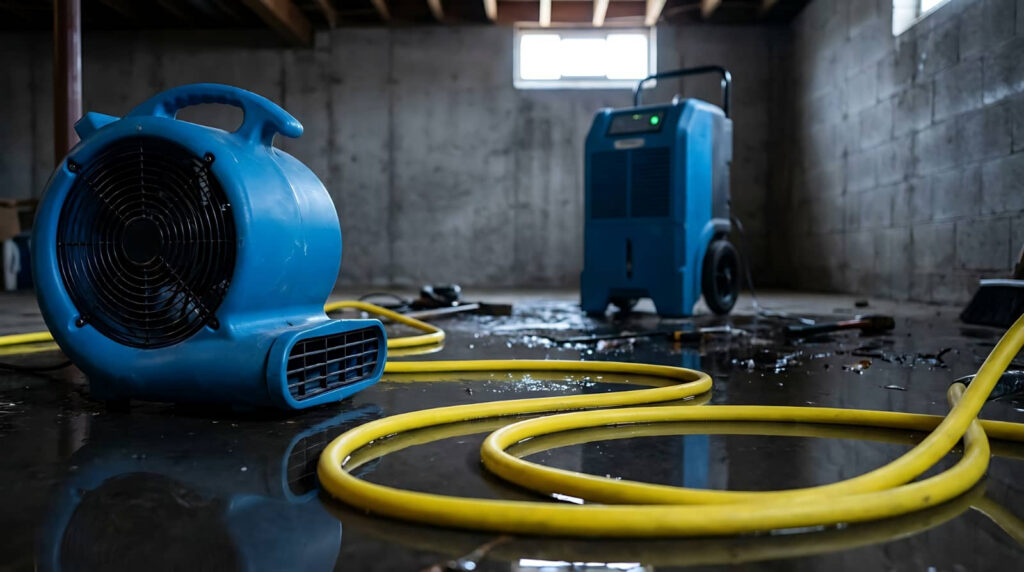
Standing water is the weight that keeps recovery from moving forward. Water Extraction Before Structural Drying is essential because leftover water can drive moisture deeper into walls, floors, and hidden cavities. When you remove bulk water first, you reduce slip hazards, expose hidden wet areas, and allow drying equipment to target residual dampness more efficiently. Skip this step, and you could face slower drying, greater damage, and moisture conditions that become much harder to control.
Key Takeaways
- Water extraction removes standing water first, preventing further moisture migration into walls, floors, and cavities.
- Early extraction shortens drying time by letting equipment focus on residual dampness instead of free water.
- It improves safety and access by reducing slip hazards and revealing hidden wet areas more accurately.
- Proper extraction lowers the risk of microbial growth, trapped moisture, and hidden damage in subfloors and wall cavities.
- Skipping extraction overloads drying equipment, extends drying cycles, and can create misleading surface-dry readings.
Why Water Extraction Comes First
Water extraction comes first because it removes the bulk of the standing water before any drying equipment starts work. You gain control of the damage when you extract water first, because saturated surfaces stop feeding moisture into walls, floors, and cavities.
In water extraction before structural drying, you create safer access for inspection, reduce slip hazards, and let you identify hidden wet areas with better accuracy. You also limit the load on drying equipment, so you can place it where it matters most.
This sequence supports a tighter drying plan, clearer monitoring, and more reliable restoration decisions. When you follow this order, you work with your team, not against the moisture, and you help the structure move into recovery faster and with fewer complications.
How Water Extraction Speeds Structural Drying
By removing standing water first, you shorten the time moisture stays available to migrate into porous materials, so drying equipment can work on residual dampness instead of bulk liquid.
You’ll usually see faster equilibrium because air movers and dehumidifiers aren’t fighting pooled water. That means you and your team can restore a tighter drying window and track progress with more confidence.
- Less surface saturation
- Faster evaporation from walls and floors
- Lower humidity load in the room
- Reduced wicking into trim and insulation
- More predictable drying benchmarks
When you clear the excess water, you help every downstream step perform better. Your space feels more controlled, and your crew can move together with a shared, practical plan.
Best Water Extraction Methods for Water Damage
Choosing the right extraction method shapes how well the rest of the drying process works. You can match the tool to the material, saturation level, and access limits.
For hard floors, use a truck-mounted or portable extractor with a squeegee wand to pull standing water fast. On carpets, you should combine a weighted extraction wand with controlled overlap to remove water from the backing and pad.
For tight spaces, use a crevice tool, stair tool, or moisture-rated wet vac to reach edges and corners. If you’re working around delicate finishes, lower pressure and make multiple passes instead of forcing water deeper.
When you choose the right method, you protect your space, support your team, and set up faster structural drying with cleaner, more consistent results.
Risks of Skipping Water Extraction
If you skip water extraction, you leave too much free water in place, and that slows evaporation, overloads drying equipment, and raises the risk of hidden moisture in subfloors, wall cavities, and other assemblies.
You also make the job harder for your crew and less predictable for the whole team.
- Reduced airflow effectiveness
- Longer drying cycles
- Higher material saturation
- Increased microbial growth potential
- Greater chance of trapped moisture
You’ll see surfaces look dry while deep layers stay wet, which can distort readings and delay progress.
That’s why extraction comes first: it gives your drying setup a fair chance to work and keeps your project on track with the rest of the restoration group.
What to Do After Structural Drying
Once structural drying is complete, you should verify that all affected materials have reached acceptable moisture levels, then document your readings before removing equipment and reopening the space.
Next, inspect hidden cavities, base plates, and insulation for residual dampness, and confirm that HVAC systems aren’t recirculating moisture or contaminants.
You should clean and disinfect surfaces as needed, replace damaged materials, and dispose of waste according to local requirements.
Then, restore removed components, test electrical and mechanical systems, and monitor the area for 24 to 48 hours to confirm conditions stay stable.
Keep your records, photos, and equipment logs together so your team can review the job with confidence.
When you close out the project this way, you protect the space and support everyone involved.
Frequently Asked Questions
How Soon Should Water Extraction Begin After a Leak?
You should start water extraction immediately, ideally within minutes of discovering the leak. Quick action limits saturation, reduces material damage, and improves drying outcomes, helping you protect your space and restore conditions faster.
Can Homeowners Safely Perform Water Extraction Themselves?
You can handle minor surface water with a wet vac, but you shouldn’t tackle deep saturation, contaminated water, or hidden moisture yourself. You’ll need professional tools, safety gear, and moisture monitoring for complete drying.
Which Materials Require Specialized Extraction Equipment?
Carpets, pad, hardwood, drywall, insulation, and porous composites need specialized extraction equipment. You’ll protect the structure, reduce lingering moisture, and avoid overworking your crew, keeping your restoration team aligned and effective.
Does Water Extraction Help Reduce Mold Growth?
Yes, it does. You’ll reduce moisture quickly, which limits mold-friendly conditions and supports faster drying. Still, you can’t rely on extraction alone; you’ll need prompt dehumidification, airflow, and material monitoring to control growth effectively.
How Is Moisture Measured After Extraction?
You measure moisture with pin or pinless meters, hygrometers, and infrared scanners; they reveal hidden wet spots faster than lightning. You compare readings, document baselines, and track drying progress until materials return to acceptable levels.
Review
You can’t dry what you haven’t first removed. Water extraction clears standing water, reduces slip hazards, and exposes hidden saturation, while structural drying then targets the residual moisture left behind. Skip extraction, and you’re fighting runoff, slow evaporation, and rising microbial risk; extract first, and you speed drying, protect materials, and improve results. In practice, the order matters: extraction is the fast reset, structural drying is the controlled finish.