
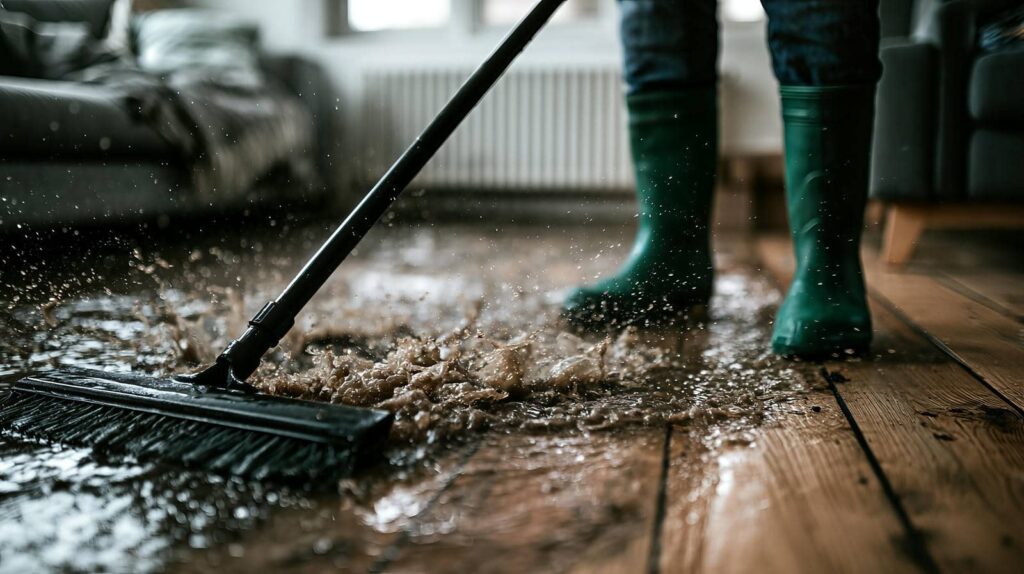
When you find standing water after a leak or flood, you need to act fast and in the right order. Shut off the water and power, stop the source, and protect floors and furniture before you start removing water. Even a small amount can hide behind walls or under cabinets, where damage keeps spreading. The next steps can save you time, money, and a lot of cleanup.
Key Takeaways
- Shut off the main water and power, then wear protective footwear before entering the flooded area.
- Stop the leak at its source by closing the nearest valve and checking visible fittings for damage.
- Remove standing water with a wet/dry vacuum, sump pump, buckets, or towels, emptying containers often.
- Dry floors, baseboards, and furniture quickly with fans and towels to prevent warping, mold, and hidden moisture damage.
- Call professional water damage experts if water reaches outlets, HVAC, structural cavities, or if floors feel unstable or smell musty.
Shut Off Water and Power First
Before you start removing standing water, shut off the main water supply and cut power to the affected area if it’s safe to do so.
You protect yourself and everyone in the home by stopping electrical hazards before you enter wet rooms. If water reaches outlets, cords, or appliances, avoid contact until a qualified professional clears the space.
Wear dry shoes with insulated soles, and keep children and pets away from the area.
Once the space is safe, you can begin standing water removal from house surfaces with confidence and control.
Gather buckets, a wet vacuum, and absorbent materials, then work from the outer edges inward. Move steadily, check for hidden pooling, and stay alert for slippery floors.
Your careful first step helps your household recover together.
Stop the Leak at the Source
Once the area is safe, you should stop the leak at its source right away to limit further damage. Trace the water back to the failed fixture, supply line, appliance, or roof opening, and close the nearest valve if you can do it safely.
If the break is on a main line, keep the shutoff closed and wait for a licensed plumber or utility tech.
Inspect visible connections for drips, cracks, or loose fittings.
Tighten only accessible parts you recognize and can reach safely.
Use a temporary patch or clamp for a minor pipe leak until help arrives.
If you’re unsure, don’t force it. A careful pause now helps your home crew stay ahead of the problem and keeps the cleanup manageable.
Protect Floors, Walls, and Furniture
Dry floors as quickly as you can to reduce warping, staining, and slip hazards.
Shield walls from moisture by wiping baseboards, checking for seepage, and keeping airflow on the affected area.
Move furniture to a dry space right away so upholstery, wood, and finishes don’t absorb more water.
Dry Floors Quickly
As soon as you can, start removing water and moisture from the floor to limit damage to the subfloor, baseboards, walls, and nearby furniture. You’ll work best when you move methodically and keep the area clear. Use towels, a wet/dry vacuum, and fans to speed drying without spreading water around.
Blot and extract standing water until the surface feels damp, not wet.
Open windows if conditions allow, and run fans to move air across the floor.
Lift rugs, pads, and small items so moisture doesn’t stay trapped below them.
Check the floor every hour for cool spots or softening. If you’re part of a team handling the cleanup, stay consistent so everyone works from the same plan.
Fast drying helps you protect the room and regain control sooner.
Shield Walls From Moisture
While you’re drying the floor, keep water from wicking into walls and trim by protecting the lower edges of the room. You can tape plastic sheeting to the baseboard line, then extend it a few inches onto the floor to form a simple moisture barrier.
Use towels or absorbent pads along the wall-floor joint to catch seepage, and replace them as they saturate. If drywall feels damp, run fans nearby and keep air moving across the surface without blasting directly into the wall cavity.
Check corners, door casings, and closet bottoms often, since they trap moisture. By sealing these edges early, you protect the room’s structure and give your cleanup team a cleaner, safer space to recover together.
Move Furniture To Safety
Shift furniture out of the wet zone as soon as you can to keep moisture from damaging legs, bases, and upholstery. You’ll protect flooring and make cleanup easier for everyone helping.
Work with a partner when possible, and lift, don’t drag, to avoid scratching surfaces. If an item is too heavy, slide a plastic sheet or furniture sliders underneath before moving it.
- Move sofas, chairs, and tables to a dry room.
- Set wooden pieces on blocks so air can circulate.
- Check hidden pads and feet for trapped water.
Keep pathways clear, and place foil or waterproof barriers under any temporary storage. If you share the space with family or neighbors, let them know what you’re moving so nobody slips or repositions wet items.
Remove Standing Water Safely
Start by cutting power to any affected area before you remove standing water, especially if outlets, cords, or appliances may be wet.
Then wear waterproof boots and gloves so you can work safely and confidently.
Use a wet/dry vacuum, sump pump, or bucket for shallow water, and move methodically from the highest point toward the drain.
If the water is deep, contaminated, or rising, leave the area and call trained help.
Keep children and pets away while you work.
Empty containers often so you don’t slow down.
Place the hose or vacuum discharge outside, away from the foundation, so water doesn’t flow back in.
Check for hidden pockets under rugs or cabinets, and keep your footing steady on slick floors as you work together with the conditions.
Dry Wet Areas Before Mold Starts
Once the standing water is out, dry the wet surfaces right away to slow mold growth and limit further damage.
You’ll work best if you move room by room and keep air flowing. Open windows if weather allows, run fans, and use a dehumidifier to pull moisture from the air. Remove damp rugs, cushions, and towels so they can dry separately.
Wipe hard surfaces with clean, absorbent cloths.
Pull furniture a few inches from walls so air can move around them.
Check humidity and keep it low until everything feels dry.
If you stay steady and organized, you’ll help your home recover faster and reduce the chance of lingering odors.
Trust the process; quick drying makes a real difference.
Watch for Hidden Water Damage
Even after visible water is gone, you need to watch for hidden damage in places moisture can linger.
Check baseboards, drywall seams, under cabinets, and behind appliances for swelling, staining, or soft spots.
Press gently on floors near the leak; a spongy feel can mean trapped moisture under the surface.
Open closets and move stored items so air can reach tight spaces.
Lift rugs and inspect padding, since both can hold water longer than you expect.
Look for peeling paint, warped trim, or a musty smell that signals damp material inside walls or flooring.
If you act early, you protect your home and help your space feel safe again for everyone living there.
Know When to Call Pros
If you can’t verify that hidden water is gone from wall cavities, subfloors, or insulation, call a pro before damage spreads.
You should also get expert help when standing water follows severe flooding, because contamination and structural risks can rise fast.
A trained crew can measure moisture, remove water safely, and reduce the chance of long-term problems.
Hidden Water Damage
When water sits behind walls, under flooring, or inside cabinets, you can’t always see the full extent of the damage right away. You may feel tempted to dry the surface and move on, but hidden moisture can stay trapped in framing, insulation, and subfloors. That’s when calling a pro helps you protect your home and stay in control.
You notice soft drywall, warped trim, or musty odors.
Your flooring feels uneven or sounds hollow when you walk on it.
Moisture readings stay high after basic drying.
A trained technician can use meters and thermal tools to find concealed pockets, then guide you on safe repairs. You’re not dealing with this alone—getting help early keeps the cleanup organized and gives you confidence in the next step.
Severe Flood Risks
Severe flooding calls for professional help fast because large volumes of water can overwhelm standard cleanup methods and keep damaging your home.
You may need certified crews when water reaches outlets, HVAC equipment, or structural cavities, or when sewage, chemicals, or storm runoff are present. These risks call for extraction, moisture mapping, and controlled drying that you probably can’t do safely with household tools.
You’re not overreacting by calling pros; you’re protecting your home and the people in it. A trained team can isolate hazards, document losses, and reduce mold, corrosion, and hidden rot.
If water keeps rising, if floors feel unstable, or if odors turn sharp, step back and get help. That’s the smart, steady move your recovery deserves.
Prevent Standing Water Next Time
To prevent standing water next time, inspect plumbing, appliances, and roof or window seals regularly so you can catch leaks early. You’ll protect your home and feel more confident when each system works as expected.
Create a simple routine:
- Check supply lines, drain traps, and appliance hoses for corrosion or looseness.
- Clear gutters, downspouts, and exterior drains so water moves away from your foundation.
- Test sump pumps, shutoff valves, and floor drains before storm season.
If you spot moisture, dry it fast and fix the source before it spreads. Add leak sensors near sinks, water heaters, and laundry areas for early alerts.
With steady upkeep, you’ll reduce damage, stay prepared, and keep your home safe, dry, and welcoming.
Frequently Asked Questions
How Do I Know if the Leak Is Still Active?
You’ll know it’s still active if water reappears, the meter keeps moving, or damp spots expand. Shut off fixtures, dry surfaces, then check pipes, appliances, and ceilings for fresh moisture or dripping.
Can I Use a Wet Vacuum on All Floor Types?
No, you can’t use a wet vacuum on all floor types; tile welcomes it, wood resists it. You should check manufacturer guidance, use gentle suction, and avoid saturating seams, finishes, or adhesive-backed flooring.
How Long Does Mold Take to Start Growing?
Mold can start growing in 24 to 48 hours after moisture appears. You should dry wet materials fast, keep humidity low, and watch for discoloration or musty odors so you can act early.
What Personal Safety Gear Should I Wear During Cleanup?
You should wear waterproof boots, gloves, safety glasses, and an N95 or respirator. If water’s contaminated, add coveralls and a face shield. You’ll stay safer, cleaner, and better protected while you work.
Should I Document Damage for My Insurance Claim?
Yes, you should document damage for your insurance claim. You’ll want clear photos, videos, and dated notes before you move items. Keep receipts for cleanup, and contact your insurer promptly to support your claim.
Summary
When a leak or flood leaves standing water, you need to act fast—because the longer it sits, the more damage it causes. Shut off the water and power, stop the source, protect what you can, and remove the water safely. Then dry everything thoroughly and check for hidden moisture. If the damage is severe, call a pro. A quick response now can spare you costly repairs later and help keep your home safe.