
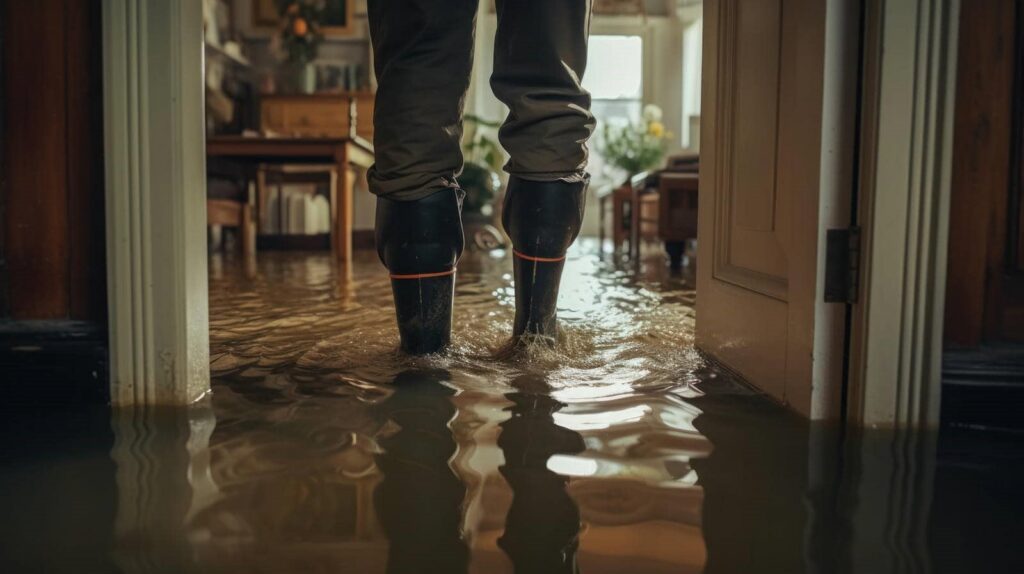
Before you start drying out your house, shut off the water source and check for electrical hazards, sagging ceilings, or slippery floors. Then remove standing water with a wet/dry vacuum, pull out soaked items that can trap moisture, and set up fans and dehumidifiers to move air safely. Hidden dampness behind walls or under flooring can still cause water damage, so you’ll want to know what to inspect next.
Key Takeaways
- Shut off the water source and electricity near affected areas to prevent flooding, shocks, and other hazards.
- Remove standing water quickly using pumps, wet/dry vacuums, mops, and buckets.
- Discard soaked porous materials like carpet, cardboard, insulation, and cushions that cannot dry safely.
- Use fans, dehumidifiers, and open windows to dry walls, floors, and hidden spaces with good airflow.
- Inspect for mold and hidden damage, then clean hard surfaces and repair leaks before rebuilding.
Stop the Leak and Make the Area Safe
First, shut off the water source and stop the leak before you do anything else.
Then inspect the area for hazards, including electrical outlets, damaged cords, and slippery surfaces. If water is near wiring, turn off power to the affected circuit at the breaker box and stay clear until you’re sure it’s safe.
Wear gloves, boots, and eye protection so you can work with confidence. Mark unstable flooring or weak ceilings so no one in your household steps in the wrong place.
Open doors and windows if weather allows, because airflow supports how to dry out a house after water damage.
Keep pets and kids out of the area, and document visible damage for your records before you move on to cleanup.
Remove Standing Water and Wet Materials
Start removing standing water as soon as the area is safe, using a wet/dry vacuum, pump, mops, and buckets to pull moisture out quickly. You’ll protect framing, flooring, and finishes by getting water out before it soaks deeper.
Remove soaked rugs, cardboard, cushions, and other porous items that can’t be cleaned and dried safely. Bag smaller wet debris to limit contamination, and set damaged materials apart for disposal or inspection.
If drywall, insulation, or ceiling panels stay saturated, cut them out only if you’re trained and the area is stable. Wear gloves, boots, and eye protection while you work.
Keep pathways clear so your crew or family can move safely. Acting together here helps your home recover faster and reduces the chance of hidden damage and mold.
Dry Out the House Fast
Once the standing water is gone, move quickly to dry the structure with fans, dehumidifiers, and open windows if outdoor conditions are dry.
You should create steady airflow and lower humidity right away so moisture doesn’t linger and invite damage.
Keep your family’s space safe by using grounded cords, plugging equipment into dry outlets, and watching for overheated motors or tripped breakers.
Work as a team and check the hygrometer often.
- Aim fans across open areas to push humid air out.
- Run dehumidifiers continuously and empty them before they overflow.
- Close windows if outdoor air turns damp or rainy.
Drying fast helps your home recover sooner and keeps everyone in your household on the same page.
Dry Walls, Floors, and Hidden Areas
Wall moisture can hide behind baseboards, under flooring, and inside wall cavities, so you’ll need to check every affected surface as you dry the house.
Remove wet rugs, lift loose flooring edges, and pull back trim where you can safely do so. Aim airflow across damp drywall, subfloors, and joists with fans, and keep a dehumidifier running to pull moisture from the air.
If insulation feels wet, expose the area only as needed so air can reach it. Use a moisture meter to track progress at different spots, not just the surface.
Keep children and pets out of drying zones, and wear gloves and slip-resistant shoes. When you work methodically, you protect your home and stay part of the crew getting it dry.
Check for Mold and Repair Damage
After the house is dry, inspect for mold growth and damage that needs repair, especially in hidden spaces like behind trim, under flooring, and inside wall cavities.
Wear gloves, an N95 respirator, and eye protection so you stay safe while you check. If you spot musty odors, discoloration, or soft materials, treat them as warning signs.
Remove and discard porous materials that stayed wet too long, such as insulation, carpet pad, and swollen drywall.
Clean hard surfaces with detergent and dry them fully; if contamination is extensive, call a licensed mold remediator.
Repair leaks, replace damaged framing, and seal openings so moisture doesn’t return.
You’re protecting your home and the people in it, and that shared effort matters.
Frequently Asked Questions
Should I Call My Insurance Company Before Cleanup?
Yes—call your insurance company first, if you can. You’ll protect your claim, get guidance on covered steps, and document damage before cleanup. Then move quickly to stop water, dry safely, and prevent mold.
How Do I Document Water Damage for a Claim?
How do you document water damage for a claim? You photograph every affected area, note dates, save receipts, and list damaged items. You’ll build a clear claim file, protect yourself, and speed approval safely.
When Should I Hire a Professional Water Restoration Company?
You should hire a pro if water’s contaminated, damage is widespread, mold’s growing, walls or flooring are saturated, or electricity’s affected. They’ll use equipment and drying protocols you can’t safely match.
Is My Electrical System Safe After Flooding?
No, you can’t assume your electrical system’s safe after flooding. You should shut off power, avoid outlets, and call a licensed electrician to inspect wiring, breakers, and panels before you reenergize anything.
Can I Stay in the House During the Drying Process?
Usually, you can stay if the air’s moving like a steady river and hazards are gone. You’ll need safe power, dry floors, and good ventilation. If mold, sewage, or structural damage lingers, leave.
Conclusion
In the end, dry out your house methodically and safely. Stop the leak, remove standing water, and keep air moving with fans and dehumidifiers. Check walls, floors, and hidden spaces for trapped moisture, and wear protective gear while you work. If you find mold or damaged materials, act fast and replace what you can’t save. As the saying goes, “An ounce of prevention is worth a pound of cure,” so fix problems now to avoid bigger damage later.