
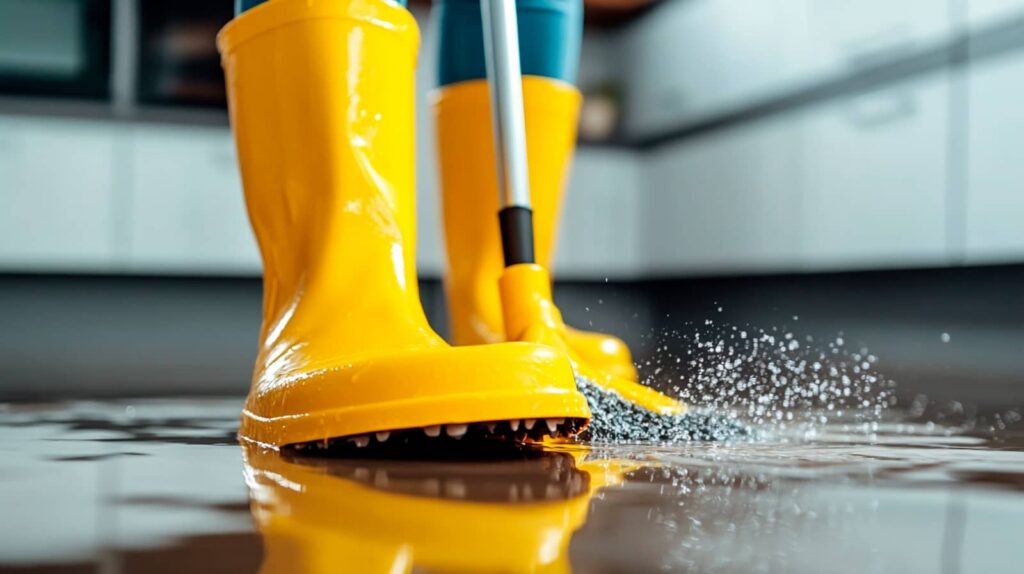
When water enters your property, you need to act fast: stop the source, cut power if there’s any chance of electrical contact, and document every affected area for insurance. Flood Cleanup then focuses on removing standing water, salvaging what you can, and drying the space completely before mold takes hold. The first few hours can influence how much damage you’ll face, and the next steps matter more than you might expect.
Key Takeaways
- Stop the water source and block further entry if it is safe to do so.
- Treat flooded areas as electrically hazardous and avoid standing water near outlets or panels.
- Photograph damage, save receipts, and track all cleanup and repair details for insurance claims.
- Remove standing water quickly, then dry the area with fans, dehumidifiers, and ventilation.
- Watch for mold within 24 to 48 hours and call professionals for serious or hidden water damage.
Stop the Water Source First
Before you start cleanup, you need to stop the water source first, because continued flooding will keep damaging floors, walls, insulation, and contents.
In flood cleanup, locate the shutoff for the supply line, main valve, or failed appliance and close it completely. If storm water is entering, block the opening with sandbags, boards, or temporary barriers only if you can do so safely.
Document the source, the time you stopped it, and any visible damage for your records.
Then inspect the affected area for fresh seepage so you know the flow’s contained.
When you act quickly, you protect your home and your team, and you create the stable conditions you need for the next cleanup steps.
Check for Electrical Hazards First
Once the water source is stopped, you need to treat every flooded area as electrically unsafe until you prove otherwise.
Stay out of standing water if any outlet, appliance, cord, or junction box is submerged. If you can reach your main breaker without entering water, switch off power to the affected zones or the whole property.
Never touch a wet panel with bare hands. If you smell burning, hear buzzing, or see sparks, back away and call an electrician or emergency services.
Use a noncontact voltage tester only from dry ground. Keep family members, tenants, and pets away from wet rooms, metal fixtures, and extension cords.
If you feel part of a prepared team, share the same rule: no one re-enters until electrical safety is confirmed by a qualified professional.
Document Flood Damage for Insurance
You should photograph every damaged area before you move or discard anything, making sure each image shows the extent of water intrusion, structural damage, and affected contents.
Keep receipts for cleanup materials, repairs, temporary lodging, and any emergency services, and save them with dated records in one file.
These records help you verify losses, support your insurance claim, and document the full cost of flood cleanup.
Photograph All Damaged Areas
As soon as it’s safe to enter the affected area, photograph every damaged room, surface, appliance, and personal item to create a clear record for your insurance claim. Use your phone or camera in good light, and capture wide shots first so the layout is obvious.
Then take close-ups that show water lines, warping, staining, mold, and broken components. Keep moving methodically so you don’t miss anything.
- Photograph each room from multiple angles.
- Include intact items beside damaged ones for context.
- Capture serial numbers, labels, and model plates.
- Use timestamp settings if your device allows it.
You’re building a reliable visual file that helps your insurer understand the full scope of loss. Stay organized, and document everything before cleanup starts, so your evidence stays complete and credible.
Save Receipts And Records
Keep every receipt and record related to the flood, because insurers need proof of what you spent and when you spent it. Save invoices for pumps, fans, dehumidifiers, cleaning agents, gloves, and contractor labor.
Keep hotel bills, meals, fuel, and storage fees if you’d to leave home or move contents. Write the date, vendor, amount, and purpose on each item, then scan copies and back them up in cloud storage and a folder.
Track calls, claim numbers, adjuster names, and repair estimates in a single log. Organize files by damage type so you can submit a clean claim quickly.
When you document everything, you protect your payout and join the homeowners who recover faster and with less stress after flooding.
Remove Standing Water Fast
You need to pump out standing water as soon as you can, using a submersible pump or wet vacuum sized for the depth and volume.
Shut off the source and block any further inflow from broken pipes, drainage paths, or seepage so the area doesn’t refill.
Fast removal reduces saturation, limits structural damage, and helps you start drying the space sooner.
Pump Water Out
Start by pumping out standing water as soon as it’s safe to enter the area. Use a submersible pump for deep water and a wet/dry vacuum for shallow puddles.
Keep the discharge hose outside and lower than the pump to maintain flow. Wear gloves, boots, and eye protection, and check cords for damage before you plug in equipment. Work in sections so you can monitor the water level and spot hidden hazards.
If you’re part of a team, coordinate timing so everyone stays clear of electrical equipment and moving water.
- Remove water from the lowest points first.
- Empty containers before they overflow.
- Watch for shifting debris underfoot.
- Keep the work area well lit.
Stop Further Inflow
Once the standing water is under control, stop more water from entering by identifying the source and shutting it off as quickly as possible. If the leak is from a supply line, close the main valve.
If it’s rain intrusion, seal openings with plastic sheeting, boards, or sandbags. Move belongings away from active drips and cover exposed furniture with waterproof tarps.
Check basement windows, door thresholds, sump systems, and wall penetrations for new flow paths. If you can do it safely, disconnect power to affected areas before you work.
Track where water’s coming from so you can brief your cleanup crew, insurer, or restoration partner. Acting together, you’ll protect the space, reduce losses, and keep the recovery moving with less stress and fewer surprises.
Save Wet Items Before They Ruin
Act quickly to save wet items before mold, staining, and permanent damage set in. You can often recover valuables if you sort them immediately and handle each material correctly. Move records, photos, textiles, and electronics to a clean, stable area, and keep similar items together so you don’t mix salvageable pieces with ruined ones.
- Rinse mud from hard surfaces with clean water.
- Blot fabrics; don’t rub, which spreads stains.
- Separate wet paper to prevent sticking.
- Remove batteries from devices if you can do it safely.
Pack items loosely in ventilated containers, label each group, and document damage for insurance. If you’re unsure about a family heirloom or sensitive equipment, set it aside for expert review. Staying organized helps your household recover faster.
Dry the Room All the Way
After you’ve moved out salvageable items, dry the room completely so hidden moisture doesn’t keep feeding mold, odors, and structural damage. Open windows if the weather’s dry, then run fans to move air across floors, baseboards, and wall cavities.
Pair them with a dehumidifier and keep doors open so air can circulate room to room. Lift carpet edges, pull wet padding, and check under furniture, trim, and appliances where water lingers.
Use a moisture meter on drywall, wood, and subfloors until readings return to normal. If you still feel cool, damp air or smell a musty odor, keep drying.
Stay patient: thorough drying protects your home, helps your crew work together, and lowers the chance that minor seepage turns into bigger damage later.
Clean and Disinfect Flooded Surfaces
With the room dry, you can clean away dirt, silt, and residue before you disinfect.
Mix warm water with detergent, then scrub hard, nonporous surfaces until they’re visibly clean. Rinse each area with clean water so disinfectant won’t be diluted by grime.
Next, apply an EPA-registered disinfectant according to the label, keeping the surface wet for the full contact time. Wear gloves, boots, and eye protection while you work, and ventilate the space if you can.
- Clean first, disinfect second.
- Use labeled products only.
- Keep surfaces wet as directed.
- Wash tools and hands after finishing.
You’re restoring a safe, shared space, so move methodically and cover every flooded surface, including floors, walls, counters, and fixtures.
Spot Mold Problems Early
Even after cleanup, you should keep watching for mold because it can start growing in damp materials within 24 to 48 hours.
Check walls, baseboards, ceilings, insulation, carpet padding, and stored items for fuzzy patches, dark spotting, or a musty odor. Use a flashlight to inspect corners, closets, and behind furniture where airflow is weak.
If paint bubbles, drywall warps, or wood feels soft, moisture may still be trapped. You can also monitor humidity; keep it below 60% so mold won’t spread as easily.
Remove wet contents quickly and separate clean items from suspect ones to protect your space and your people.
Take photos and notes of changes, so you can track problems early and stay organized with your cleanup crew.
Call Flood Cleanup Pros for Serious Damage
When floodwater has soaked structural materials, reached electrical systems, or covered a large area, call a professional flood cleanup crew right away.
You need trained technicians when damage goes beyond surface moisture, because they can assess hidden saturation, contamination, and building stability fast. Their equipment removes water deeper and faster than household tools, which helps limit swelling, corrosion, and mold growth.
- They inspect walls, subfloors, and insulation for trapped water.
- They shut down hazards and coordinate safe power restoration.
- They use industrial extractors, air movers, and dehumidifiers.
- They document damage for insurance and repair planning.
You’ll protect your property better when you work with a team that knows the process and keeps you informed.
Frequently Asked Questions
How Soon Should I Contact My Insurance Company After Flooding?
Contact your insurance company immediately after flooding, ideally within hours. You’ll speed claims, document damage early, and avoid delays. Take photos, protect belongings, and report only accurate facts so you’re covered properly.
Can I Stay in My Home During Minor Flood Cleanup?
You can stay only if the water’s clean, the affected area’s small, and you’ve shut off hazards. You should ventilate, dry quickly, monitor mold, and leave if sewage, electrical damage, or illness risk appears.
What Personal Protective Equipment Should I Wear During Cleanup?
You should wear waterproof gloves, rubber boots, eye protection, and an N95 or better respirator; if you’ll handle contaminated water, add coveralls. You’ll protect yourself, reduce exposure, and keep cleanup work safer.
How Do I Know if Floodwater Contaminated My Food?
If floodwater touched it, you can’t trust it. You’ll need to discard any food, opened containers, or sealed packages with damaged wrappers. Keep refrigerated items above 40°F only if power stayed steady.
Which Household Items Are Usually Impossible to Salvage After Flooding?
You’ll usually toss soaked drywall, insulation, particleboard furniture, mattresses, carpets, upholstered items, and any electrical appliance that got wet. If sewage touched them, don’t try salvaging; hidden contamination and structural damage make reuse unsafe.
Review
When water enters your property, you need to act fast, not wait. Stop the source, cut electrical risks, and document every inch of damage for insurance. Remove standing water, save what you can, and dry the space completely. Clean and disinfect hard surfaces, then watch closely for mold. A wet room can look stable while hiding serious damage. If the flooding is heavy, call flood cleanup pros before minor moisture becomes major loss.