
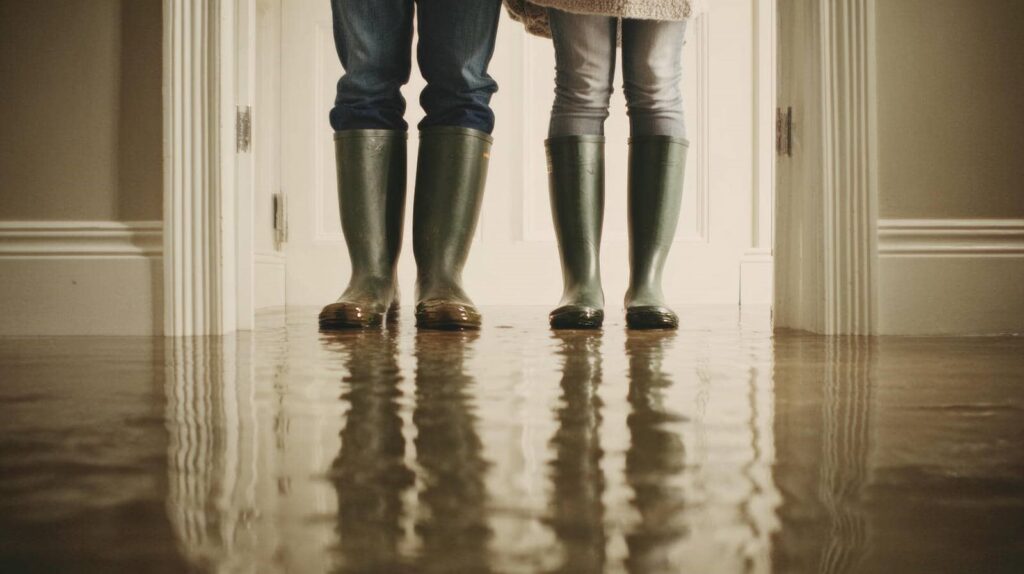
When water starts to make itself at home, you need to act quickly. You’ll shut off power and water, document the water damage, and remove standing water before it spreads. Then you’ll dry, clean, and sanitize affected areas to limit structural issues and microbial growth. If the flooding is extensive, you may need professional support to restore safety and reduce further loss.
Key Takeaways
- Stop the water source if safe, and shut off electricity and main water to reduce shock and further flooding.
- Photograph all damaged areas and belongings before cleanup to support insurance claims.
- Remove standing water with towels, mops, wet vacuums, or pumps while wearing protective gear.
- Clean and disinfect flooded surfaces thoroughly, then dry everything quickly with airflow and dehumidifiers.
- Call water damage professionals for extensive flooding, contaminated water, or hidden wall, floor, or electrical damage.
Act Fast to Limit Water Damage
Act fast to limit water damage the moment flooding starts. You’re not alone; emergency water damage response for flooded homes works best when you move immediately and methodically.
First, identify the source and stop incoming water if you can do so safely. Then, document the affected areas with photos for your records.
Remove loose rugs, cushions, and other absorbent items to reduce saturation. Open windows and doors to improve airflow when weather allows.
Use towels, mops, or a wet vacuum to extract standing water from hard surfaces. Move undamaged belongings to a dry area.
Prioritize rooms with the deepest water and the most porous materials. Quick action lowers repair costs, reduces mold risk, and helps your home recover faster.
Shut Off Power and Water
If it’s safe to do so, shut off the main power and the main water supply as soon as flooding starts. Use the breaker box or service disconnect, then close the main water valve. This helps prevent shock, short circuits, and more water entering your home.
If you can’t reach these controls without stepping into standing water, stay out and call your utility company or an electrician. Turn off individual circuits only if the panel is dry and accessible.
After power is isolated, keep family members away from outlets, cords, and wet appliances. Your quick action protects everyone and gives your home a better chance of recovery. You’re doing the right thing by putting safety first and acting together with your household.
Document Flood Damage for Insurance
You should photograph all affected areas before cleanup, capturing wide shots and close-ups that clearly show water lines, structural damage, and standing water.
Record every damaged belonging with a brief description, estimated value, and condition so you can support your claim.
Keep all cleanup and repair receipts, since insurers often need proof of your expenses.
Photograph All Affected Areas
Before cleanup starts, photograph all affected areas to document flood damage for insurance. Use your phone or camera to capture wide shots of every room, then take closer images of walls, floors, baseboards, outlets, and visible stains.
Include each angle, doorway, and ceiling line so the full extent is clear. Turn on flash only if it improves detail, and keep the camera steady to avoid blur. If water reached appliances, HVAC parts, or structural materials, photograph those too.
Aim for consistent lighting and include a few images with recognizable landmarks, like windows or stairs, so adjusters can place each photo. These records help you and your insurer verify loss, support claims, and stay organized together through the recovery process.
Record Damaged Belongings
Record damaged belongings as soon as it’s safe so you can support your insurance claim with clear, itemized evidence.
Walk room by room and list each affected item with its location, brand, model, approximate age, and visible damage. Note whether water touched upholstery, electronics, drywall, flooring, or stored boxes, and separate salvageable items from total losses.
Use short, factual notes that match what you see, and keep the list organized by room so your adjuster can review it quickly. If something’s missing, mark it as unaccounted for rather than guessing.
This careful record helps your household stay coordinated and gives your claim a stronger foundation. You’re not alone in this process; precise documentation helps protect what matters and supports a smoother recovery.
Keep Expense Receipts
Paper trails matter during a flood claim. You should keep every receipt tied to the loss, from pumps, tarps, disinfectants, hotel stays, meals, mileage, and contractor deposits.
Save paper copies in a dry folder and back them up with photos or scans on your phone. Label each receipt with the date, vendor, and reason for the expense so your insurer can verify it fast.
If you pay cash, write a brief note immediately while details are fresh. Separate emergency costs from routine spending, because adjusters review reimbursement line by line.
When you organize these records early, you protect your claim and help your household recover with less stress. You’re not handling this alone; solid documentation gives your team a stronger path forward.
Remove Standing Water Safely
Start by removing standing water as quickly and safely as possible to prevent further damage.
Before you begin, shut off electricity to affected areas if you can do so without entering pooled water. Wear waterproof boots, gloves, and eye protection, and treat all floodwater as contaminated.
Use a wet/dry vacuum, pump, or bucket to lower the water level in manageable passes. Work from the lowest point first, and keep your footing stable on slick surfaces.
If water is deep, rising, or mixed with sewage, call a qualified flood cleanup team. You’re not alone in this; steady, careful action protects your home and everyone in it.
Move slowly, monitor hidden hazards, and stop if you smell gas, hear sparking, or lose safe access.
Dry Out Your Flooded Home
Once standing water is gone, you need to dry the home fast to stop mold, warping, and hidden structural damage. Open windows if weather allows, then run fans to move air across wet areas.
Use dehumidifiers to pull moisture from rooms and keep them closed while equipment runs. Lift rugs, furniture cushions, and wet contents so airflow reaches all sides.
Remove baseboards only if needed to improve drying behind walls. Check hidden spaces with a moisture meter, especially along floors, trim, and lower walls.
Keep power off in affected zones until an electrician clears them. Monitor humidity and temperature daily, and adjust equipment as needed.
Stay patient and methodical; your steady response helps protect your home and puts your household on the path to recovery.
Clean and Sanitize Damaged Surfaces
You should clean all hard surfaces with soap and clean water to remove mud, residue, and visible debris.
Next, apply an approved disinfectant to contaminated areas and keep the surface wet for the required contact time. This step helps reduce microbial growth and gets your home ready for safe repairs.
Surface Cleaning Steps
Before you clean, remove standing water and dry the area as much as possible. Then wash all affected surfaces with hot water and a detergent to lift dirt and residue.
Work methodically from cleaner areas to dirtier ones so you don’t spread debris back across the room. Use scrub brushes, microfiber cloths, or nonabrasive pads to loosen buildup on floors, walls, cabinets, and trim.
Rinse each section with clean water and wipe it dry right away. Check corners, seams, and hidden edges where grime can collect.
Replace dirty cloths often, and keep your tools organized so the job stays manageable. If a surface still feels tacky or looks stained, repeat the wash until it’s fully clean and ready for the next step.
Sanitizing Contaminated Areas
After the damaged surfaces are clean, sanitize any areas exposed to floodwater with an appropriate disinfectant to reduce bacteria, mold, and odor.
You should mix and apply the product exactly as the label directs, because the right contact time matters. Wear gloves, eye protection, and a mask, and keep the area well ventilated.
Work from top to bottom so contaminated runoff doesn’t re-soil cleaned sections. Focus on floors, walls, cabinets, and any nonporous surface that floodwater touched.
Don’t use bleach on unsealed wood or mixed chemicals. If a surface stays damp, dry it quickly to limit mold growth.
You’re not handling this alone; follow the same steps your recovery team uses so your home becomes safe, sanitary, and ready for the next phase.
Know When to Call Water Damage Pros
If flooding has spread beyond a small area or water has soaked into walls, flooring, or insulation, call water damage pros right away.
You’ll need certified crews when water reaches electrical systems, HVAC components, or structural framing. They bring moisture meters, thermal imaging, extraction pumps, air movers, and dehumidifiers to map hidden damage and dry materials correctly.
If you smell mildew, see warped finishes, or notice rising humidity after 24 hours, don’t wait. Pros can document losses for insurance, remove contaminated debris, and verify drying targets so your home gets back to safe conditions faster.
You’re not handling this alone; skilled help gives your household a clear path forward and reduces the chance of secondary damage, mold growth, and costly repairs.
Frequently Asked Questions
How Do I Tell if Floodwater Is Contaminated?
You can’t tell by sight alone. If it smells foul, carries sewage, chemicals, or debris, or came from rivers, streets, or drains, you should treat it as contaminated and avoid contact.
Can I Stay in My Home During Cleanup?
You can stay if damage is minor, utilities work, and contamination’s ruled out; otherwise, step out. Think of your home as a ship: you’ll need safe decks, dry systems, and professional clearance first.
What Items Should Be Thrown Away After Flooding?
You should throw away porous items that soaked up floodwater, like mattresses, insulation, carpet, upholstered furniture, and food. Toss any contaminated medicine, cosmetics, or damaged electrical items. You’ll protect your home and your people.
How Long Does Mold Take to Start Growing?
Mold can start growing in 24 to 48 hours, fast and quiet. You can act quickly: dry surfaces, remove wet materials, and improve airflow. That helps protect your home, and you’re not alone.
Are Flood Repairs Covered by Homeowners Insurance?
Flood repairs’re often covered if a sudden, accidental event caused the damage, but you’ll usually need flood insurance for rising water. You can check your policy, document losses, and contact your insurer quickly.
Recap
You’ve acted fast, but the real test is still ahead. Keep watching for hidden moisture, rising odors, and slow-forming damage that can spread behind walls and under floors. If your home still feels damp, unstable, or unsafe, don’t wait. Shut things down, document what you can, and bring in water damage pros before minor problems turn into major repairs. Your next steps can protect your home, your health, and your peace of mind.