
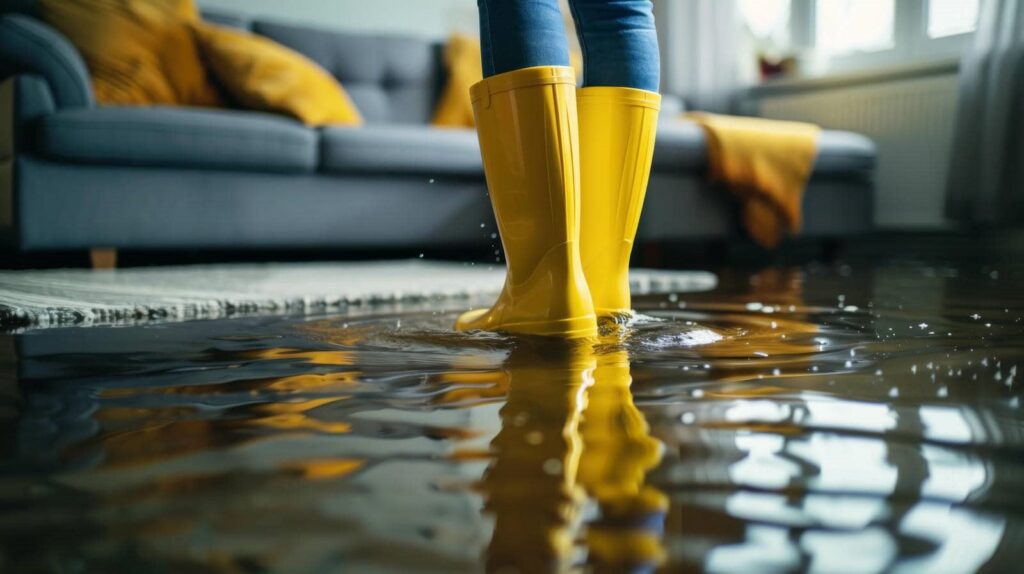
When a pipe burst in my neighbor’s kitchen, water spread faster than she could grab towels, like a machine with no off switch. You need to stay safe, shut off the source, and move what you can to dry ground before water damage spreads. Then you can start drying surfaces, check for hidden moisture, and document everything for insurance—because the next few minutes can decide what you save.
Key Takeaways
- Ensure the area is safe, then evacuate if there are gas smells, sparks, or sagging ceilings.
- Shut off the water source at the nearest valve or main shutoff as quickly as possible.
- If safe and dry, turn off electricity to prevent shocks and further damage.
- Move furniture, electronics, and valuables out of the water and elevate heavy items.
- Dry the area immediately, document all damage with photos, and call a water damage professional.
Stay Safe During Water Damage
Before you start cleanup, make sure the area is safe to enter. If you smell gas, see sparks, or notice sagging ceilings, leave and call professionals right away.
Wear boots, gloves, and eye protection so you can handle wet debris with less risk. Turn off electricity only if you can reach the panel safely and your feet stay dry. Avoid standing water near outlets, appliances, or extension cords.
Keep children and pets away, and mark slippery spots so everyone in your household stays protected. If water may be contaminated, don’t touch it without proper gear.
Knowing what to do during emergency water damage helps you act calmly, protect your space, and support your crew as you assess the damage together.
Stop the Water at the Source
Once the area is safe, shut off the water as fast as you can to limit further damage.
If the leak comes from a fixture, turn the nearest valve clockwise. If that doesn’t stop it, close your home’s main shutoff valve, usually near the meter, basement wall, or utility area.
If you can’t locate it, call your water utility for guidance. After stopping flow, confirm the water has stopped by checking the source carefully.
- Turn off the closest fixture valve
- Close the main shutoff valve
- Contact the utility if needed
- Verify the leak has stopped
You’re not alone in this step; many homeowners need a quick map of their shutoff points. Acting now protects your home and makes cleanup easier.
Move Furniture and Belongings
Now move furniture, rugs, electronics, and other belongings out of the wet area as quickly and safely as you can.
Prioritize items that can stain, swell, or short out, and ask a helper to lift with you so you don’t strain yourself. Use gloves and closed-toe shoes for grip and protection.
If an item is too heavy, shift it onto blocks, plastic bins, or foil packets to keep legs and bases above standing water.
Disconnect power only if you can reach plugs without stepping into danger. Keep pathways clear so you and your household can move confidently.
Place belongings in a dry, ventilated room, grouped by type so you can account for everything later. Staying organized now helps your home team recover faster.
Dry Floors, Carpets, and Walls Immediately
With the area cleared, start removing moisture from floors, carpets, and walls right away. Use towels, mops, and a wet/dry vacuum to pull water off hard surfaces fast. Work from the outside toward the center so you don’t spread it.
For carpets, press firmly with clean towels, then lift the nap to speed drying. Open windows if weather allows, and run fans to move air across the room. If you have a dehumidifier, place it nearby to reduce humidity and support the whole space.
- Blot, don’t rub, soft surfaces.
- Change saturated towels often.
- Aim airflow low across floors.
- Keep people and pets out.
You’ve got this, and quick action helps your home recover sooner.
Inspect for Hidden Moisture Damage
Check behind walls for soft spots, discoloration, or a musty odor that can signal trapped moisture.
Lift flooring edges and inspect under carpets or planks for damp padding, warped materials, or hidden pooling.
Look at ceilings for stains, sagging, or bubbling paint, and act quickly if you spot any of these warning signs.
Check Behind Walls
After visible water is under control, you’ll need to look for moisture that’s trapped behind walls, since hidden damage can spread quickly and lead to mold, warped materials, and structural issues.
You’re not alone in this step; many homeowners miss it at first, but a careful check can save time and repairs.
- Run your hand along baseboards for coolness or swelling.
- Watch for stains, bubbling paint, or peeling wallpaper.
- Listen for a hollow sound when you tap the wall.
- Use a moisture meter near affected areas for confirmation.
If you find damp drywall, open it only as needed and let the cavity dry with airflow.
Mark wet spots, keep the area ventilated, and call a professional if the moisture keeps returning.
Inspect Under Flooring
Next, inspect under flooring for hidden moisture, because water can wick into subfloors, carpet padding, and seams long after the surface looks dry.
Lift a corner of carpet, remove a threshold, or check a loose plank to confirm what’s happening below. Press firmly and listen for soft spots, buckling, or crunching, which can signal trapped water.
Use a moisture meter if you have one, and compare readings in damaged and dry areas. If padding feels damp, keep the flooring open and increase airflow with fans and dehumidifiers.
Don’t reinstall coverings until materials read dry and smell normal. You’re not overreacting; you’re protecting your home, your repair budget, and your crew’s health by catching hidden moisture early.
Look For Ceiling Stains
Look for ceiling stains, because they often show where water has traveled from a leak above, even if the source is no longer active.
Check for yellow rings, brown edges, bubbling paint, and soft drywall. If you spot any of these, you’re seeing a warning sign, not just a cosmetic issue. Use a flashlight and note the stain’s size and shape so you can track changes later.
- Press gently near the spot for sagging.
- Listen for dripping in quiet rooms.
- Place a bucket if moisture starts.
- Call a pro if the ceiling bows.
You’re not overreacting by checking carefully. Fast inspection helps your household stay safe, limits hidden mold growth, and keeps cleanup decisions clear.
Document the Damage for Insurance
Take clear photos and videos of every affected room, making sure you capture wide shots and close-ups of the water line, stains, warped materials, and damaged belongings.
List each damaged item, including brand, model, and estimated value if you know it, so your claim stays organized and specific.
Keep all repair receipts and cleanup invoices, since insurers often need proof of your costs to process reimbursement.
Take Photos And Videos
A clear record can make your insurance claim much smoother, so photograph and video the water damage before you start any cleanup. Use your phone’s highest resolution, and move slowly through each room so you capture wide shots and close-ups. Show water lines, warped surfaces, soaked flooring, and any visible source if it’s safe. Narrate the date, time, and what you’re seeing as you record; that detail helps later.
- Stand back for full-room context
- Zoom in on damaged walls and trim
- Capture appliances, outlets, and baseboards
- Save files in a backed-up folder
If you’re part of a household team, share the images right away so everyone stays aligned. Keep the original files unchanged, and you’ll give your insurer a clear, trustworthy timeline.
Note Damaged Items
List every damaged item as soon as you can so you have a clear inventory for your insurance claim.
Move room by room and write down furniture, flooring, drywall, electronics, clothing, and stored belongings that got wet, stained, warped, or swollen.
Include the location, brand or model if you know it, and a brief condition note.
If you’re part of a household, ask everyone to check their spaces so nothing gets missed.
Keep your list organized in a notebook or phone app, and match each entry to the photos and videos you already took.
Clear records help your adjuster see the full scope of loss and support your claim faster.
You’re not doing this alone; careful notes give your home’s recovery a stronger start.
Save Repair Receipts
Once you’ve documented the damaged items, keep every receipt tied to the cleanup and repair process. You’ll need these records to support your insurance claim and prove what you spent to protect your home.
Save invoices for extraction, drying, demolition, cleaning supplies, temporary lodging, and contractor labor. Store digital copies in a folder and keep paper copies in a labeled envelope. Include dates, vendor names, and line-item details so your claim stays organized and easy to verify.
- Photograph each receipt after you get it
- Match each cost to the related damage
- Note any out-of-pocket payments
- Share copies with your insurer promptly
When you stay organized, you make the claims process smoother and help your household recover with less stress and more confidence.
Call a Water Damage Professional
When water starts spreading through your home, call a water damage professional right away to assess the scope, stop further damage, and guide the next steps.
You’ll get a trained team that checks moisture levels, identifies hidden damage, and sets up extraction, drying, and containment fast. They can protect your flooring, walls, and belongings while reducing mold risk and structural problems.
You don’t have to figure it out alone; experienced pros work with you, explain each action, and help you make smart decisions under pressure.
If possible, share when the leak started, where you’ve seen water, and any safety concerns. Quick contact improves recovery, lowers costs, and helps your home get back to normal sooner.
Frequently Asked Questions
What Should I Pack in an Emergency Water Damage Kit?
Pack flashlights, batteries, gloves, N95 masks, plastic sheeting, duct tape, towels, a wet/dry vacuum, buckets, sanitizer, garbage bags, and copies of documents. You’ll stay ready, protect yourself, and control damage fast.
How Do I Protect Important Documents From Water Damage?
You should seal important documents in watertight plastic bags or a waterproof safe, then move them to a dry, elevated place. You can scan copies now, so you’ll protect records, money, and peace of mind.
Can I Use Household Fans to Dry a Flooded Room?
Yes, you can use household fans, but don’t rely on them alone. You’ll move air, yet trapped moisture lingers. Pair fans with open windows, dehumidifiers, and safe power sources to dry faster and protect your home.
When Should I Turn off Electricity After Water Damage?
Turn off electricity immediately if water reaches outlets, appliances, or wiring, or if you’re unsure how far it spread. You should shut off power at the breaker, stay dry, and call a qualified electrician.
How Long Do I Have to File an Insurance Claim?
You usually have days to weeks, but your policy sets the deadline, so you should file immediately. Contact your insurer, document damage, and ask about emergency coverage; acting fast protects your claim and helps you recover.
Final Thoughts
When water starts making an unexpected visit, you can steady the situation by staying safe, shutting it off at the source, and moving valuables to drier ground. Then you can begin the careful work of drying floors, carpets, and walls, while checking for hidden moisture that may be lingering below the surface. Document everything for your records, and call a water damage professional promptly so they can help restore your home with minimal disruption.