You might not know that standing water can start damaging subfloors and wall cavities within hours, even when the surface looks manageable. With same-day water extraction, you get rapid assessment, high-powered removal, and moisture control before mold and structural problems take hold. If you’re facing an urgent leak or flood, the next steps matter more than you think, and what happens in the first hour can change the outcome.
Key Takeaways
- Same-day water extraction removes standing water quickly to reduce structural damage and health risks.
- Trained technicians use pumps, wet vacuums, and moisture meters for fast, controlled cleanup.
- Immediate response helps prevent odor, microbial growth, and hidden moisture problems.
- Reliable crews provide rapid dispatch, same-day arrival, and clear updates during transit.
- Before arrival, shut off safe water sources, protect valuables, and clear access for the team.
What Is Same-Day Water Extraction?
Same-day water extraction is an emergency response service that removes standing water from your home as quickly as possible after a leak, burst pipe, or flood.
You call a same day water extraction service, and trained technicians arrive with pumps, vacuums, and moisture meters to remove water from floors, carpets, and hidden cavities. They inspect affected areas, map saturation, and work methodically to restore safe conditions.
You’re not facing this alone; you’re getting a skilled crew that knows how to act fast and protect your space. The process is technical, controlled, and focused on rapid cleanup.
Why Same-Day Water Extraction Matters
When water sits in your home, the clock starts working against you because it soaks into drywall, subfloors, insulation, and framing fast.
Same-day extraction matters because you need to remove standing moisture before it migrates deeper and turns a manageable cleanup into a larger structural problem. You also protect indoor air quality by limiting the damp conditions that support odor and microbial growth.
Quick response helps your restoration team measure moisture, target hidden pockets, and start drying with precision. That means you’re not facing this alone; you’re acting with people who know how to bring your space back under control.
Fast extraction gives your home the best chance to recover cleanly, reduces repair complexity, and helps you regain normal routines with confidence.
When Do You Need Water Extraction Now?
You need water extraction now if you’re dealing with standing water, rapid leaks, sewage backup, or any flooding that’s spreading into flooring, walls, or belongings.
Act fast when water reaches drywall, baseboards, subfloors, or electrical areas, because damage can escalate in hours. If you smell mustiness, see bubbling paint, or notice soft spots underfoot, the moisture’s already moving.
You also need immediate help after appliance failures, burst pipes, roof intrusion, or storm surge. Don’t wait for the water to “settle”; it often migrates into hidden cavities and weakens materials.
When you call right away, you protect your home, your health, and your peace of mind. You’re not dealing with this alone—we’re here to help your space recover quickly and safely.
What Happens During Same-Day Water Extraction?
When you call for same-day water extraction, a crew arrives fast, assesses the damage, and identifies the water source and affected materials.
They then remove standing water with high-powered extraction equipment to stop further spread and reduce saturation.
After that, they start drying and moisture checks to confirm hidden dampness is under control and your space is stabilizing.
Arrival And Damage Assessment
A rapid assessment begins the moment the crew arrives, because every minute counts after sudden indoor flooding. You’ll see technicians confirm the source, map affected rooms, and check for safety hazards like energized outlets or weakened flooring.
They document visible damage, note moisture spread, and identify materials that need urgent attention. This helps you feel informed and included in every decision.
- Measure water depth and affected square footage
- Inspect baseboards, walls, and subfloors
- Record contents at risk for reporting
The team uses meters and visual checks to judge how far moisture has traveled, so they can plan the right response without wasting time.
You’re not left guessing; you get a clear, technical snapshot and a fast path forward with your cleanup crew.
Water Removal Process
Once the assessment is complete, the crew starts extracting standing water right away to stop it from soaking deeper into floors, walls, and contents.
You’ll see technicians position high-capacity pumps, truck-mounted vacuums, and weighted extraction tools to pull water from carpets, pad, tile, and subfloors. They work methodically, section by section, so your space gets controlled, efficient removal instead of rushed cleanup.
Crews also clear pooled water from corners, closets, and low areas where hidden pockets can spread damage fast. As the water level drops, they remove debris that could clog equipment and slow progress.
This immediate action protects your home’s structure, reduces contamination exposure, and helps your property team move quickly toward stabilization.
You’re not left alone during this critical first step.
Drying And Moisture Checks
After the bulk water is removed, the crew moves straight into drying and moisture checks to catch hidden saturation before it turns into mold, swelling, or structural damage.
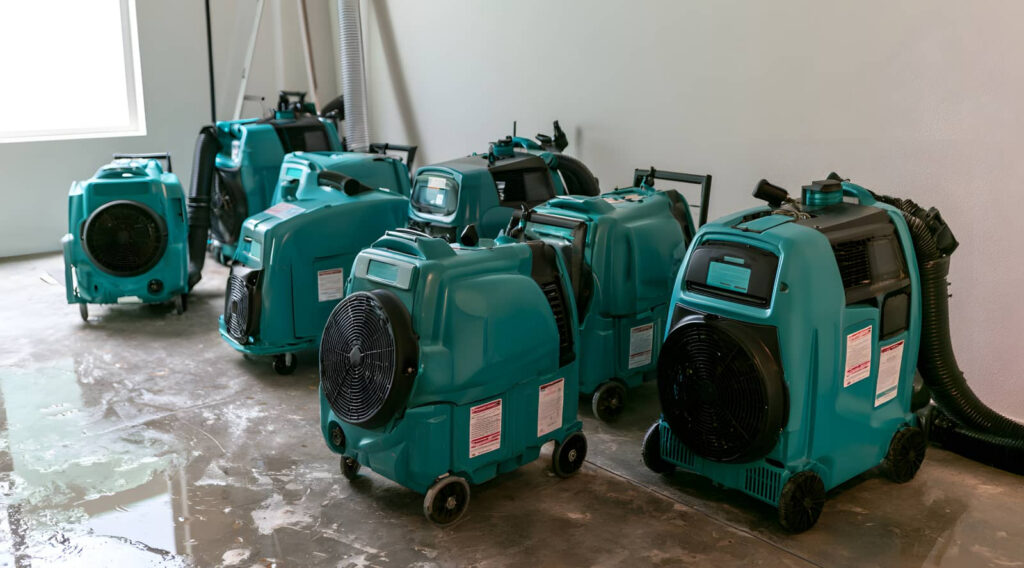
You’ll see high-velocity air movers and dehumidifiers placed to pull moisture from flooring, drywall, and framing. Technicians then test materials with meters, so they can verify what’s still wet, not guess. This matters because trapped water can linger behind baseboards and under subfloors even when surfaces look fine.
- Monitor humidity and temperature for safe drying.
- Map wet zones with thermal and moisture readings.
- Recheck daily until levels return to normal.
You’re not left wondering what’s happening; you’re kept in the loop, and your space gets a precise, fast response.
How Do Technicians Remove Standing Water Fast?
Technicians move fast with high-capacity pumps, wet vacuums, and extraction tools to pull standing water out of your space before it can soak deeper into floors, walls, and subfloors.
They map the affected area, set safe access points, and start at the lowest pooled spots to get rapid flow moving. Crews use squeegees, weighted wands, and truck-mounted systems to lift water from carpet, tile, and concrete with precision.
You’ll see them work in sections, so no area gets missed. As water drops, they check hidden pockets near baseboards and fixtures.
This organized process helps you feel supported while the team restores control fast, and it keeps your home or business ready for the next phase of cleanup.
What Water Damage Same-Day Extraction Can Prevent
Fast same-day extraction does more than clear visible water; it can stop damage from spreading into drywall, trim, insulation, and subfloors.
When you act quickly, you lower the risk of warping, staining, and hidden moisture that keeps working after the surface looks dry. You also help limit odors, microbial growth, and electrical hazards.
Structural breakdown: You reduce swelling in wood and weakening in building materials.
Hidden saturation: You keep water from traveling behind walls and under flooring.
Secondary losses: You protect finishes, furniture, and the comfort of your space.
That speed gives you a better chance to reclaim your rooms without a larger repair burden.
You’re not alone in this; fast action helps your home recover.
How Do You Choose a Reliable Cleanup Team?
You should choose a cleanup team that responds fast, because every minute of standing water increases the risk of structural and microbial damage.
Verify that they arrive with commercial-grade extraction units, air movers, and moisture meters, since proper equipment use directly affects drying accuracy and recovery speed.
When you call, ask about dispatch time and field-ready gear so you can act before the damage spreads.
Rapid Response Times
When flooding starts, every minute counts, so a reliable cleanup team should reach your property quickly and begin extraction before water migrates into walls, flooring, and furnishings.
You need a crew that answers immediately, confirms arrival, and mobilizes without delay. Fast response reduces saturation, limits odor, and protects your home’s structure, giving you confidence that you’re not handling this alone.
- Ask how soon they can dispatch.
- Verify they offer same-day arrival.
- Look for clear updates en route.
When a team treats urgency as standard, you gain a calmer path forward.
You’ll know your cleanup partner respects your time, your space, and the pressure you’re under, which matters when your home needs help now.
Proper Equipment Use
A reliable cleanup team brings the right extraction tools, air movers, and moisture meters to stop water damage from spreading. You want technicians who match each tool to your floor type, water depth, and drying goals.
High-capacity extractors remove standing water fast, while weighted air movers push dry airflow across carpets, baseboards, and hidden cavities. Hygrometers and thermal meters verify progress, so you’re not guessing.
Ask whether they sanitize and maintain equipment, because dirty gear can slow drying and spread contamination. A skilled crew will explain each step, document readings, and adjust equipment until moisture drops to safe levels.
When you choose a team that uses professional tools correctly, you protect your home, reduce stress, and join neighbors who act fast together.
What Should You Do Before Help Arrives?
Before help arrives, shut off the water source if it’s safe to do so and move people, pets, and valuables away from the flooded area.
Then you can help the crew work faster and safer by clearing access, spotting hazards, and keeping the space calm. You’re not alone here; quick, steady actions make a real difference.
- Unplug nearby electronics and avoid wet outlets.
- Close doors to contain spread and limit traffic.
- Note where water came from and what areas got hit.
If you see bubbling walls, sagging ceilings, or a strong electrical risk, stay clear and wait for trained help.
Keep phones charged, gather key contacts, and prepare to guide the team on arrival. That support helps everyone move with confidence.
How Fast Extraction Protects Your Home
Fast extraction limits how long water can soak into flooring, drywall, insulation, and framing, which helps stop swelling, staining, and structural weakening before they spread.
You protect subfloors, base plates, and wall cavities by pulling moisture out before it migrates deeper. That reduces the chance of hidden mold, warped trim, and compromised electrical materials.
You also keep humidity from climbing, so your home dries faster and more evenly. When you act the same day, you’re joining the homeowners who stop small floods from turning into major repairs.
Crews use pumps, vacuums, and moisture meters to target saturated areas fast, then guide drying and cleanup with precision. That quick response gives your home the best shot at full recovery.
Frequently Asked Questions
What Does Same-Day Water Extraction Cost?
You’ll usually pay $300-$1,500, depending on flood size, access, and drying needs. You should call fast, because delays raise repair costs. We’ll help you get a clear estimate and protect your home.
Does Insurance Cover Urgent Water Extraction?
Insurance often covers urgent water extraction if a sudden covered peril caused the loss. You should call your insurer quickly, document damage, and act fast so you protect your claim and reduce further loss.
Can Extraction Help With Sewage Backup?
Yes—ironically, the messiest water demands the fastest action. You can extract sewage backup, reduce contamination, and stop damage spreading. You’ll need protective gear, disinfection, and urgent drying so your space feels safe again.
How Long Until My Floors Dry?
Your floors’ll usually dry in 24 to 72 hours, depending on material, moisture depth, airflow, and temperature. You’ll speed drying with extraction, dehumidifiers, and fans, and you shouldn’t wait if saturation’s heavy.
Is Same-Day Service Available on Weekends?
Yes, you can often get weekend service; think of it as a lifeline in a storm. You’ll get rapid help, clear scheduling, and expert extraction to protect your home, minimize damage, and keep you covered.
Summary
When you need same-day water extraction, you’re buying time, stability, and control. Fast response helps you stop standing water before it spreads into walls, flooring, and air systems, and your cleanup team can reduce the risk of mold and structural damage with precision. Don’t wait for the situation to snowball like a steam-powered disaster—call trained technicians right away. Quick extraction protects your home, speeds recovery, and helps you get back to normal safely.