
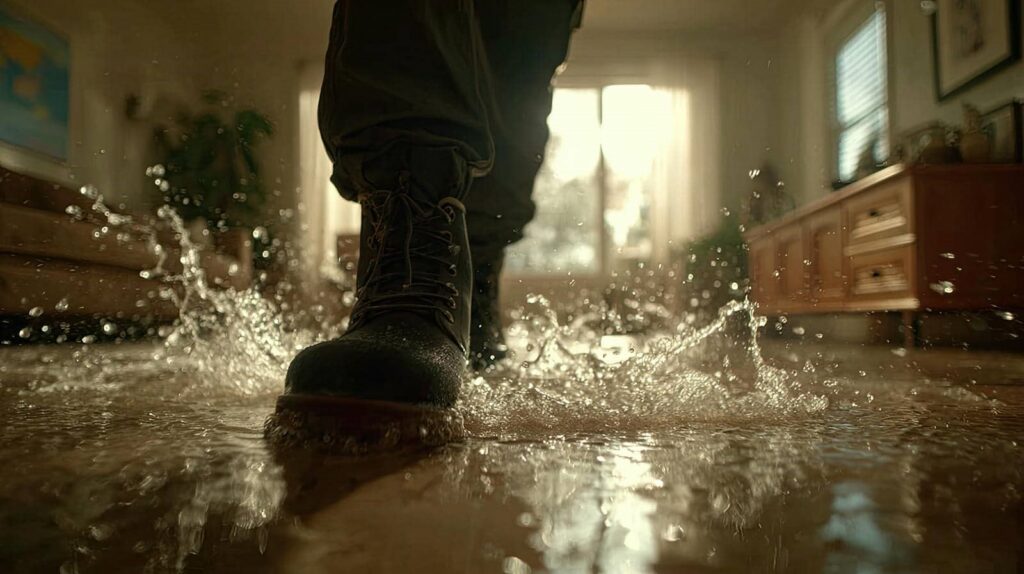
A burst pipe can turn a dry room into a hazard zone in minutes. You need to shut off the main water and power first, then contain the flow with towels or buckets before it spreads. Move valuables, photograph the damage, and start a claim record right away. After that, you’ll need a plumber and restoration crew—but the next steps matter even more.
Key Takeaways
- Shut off the main water supply immediately and turn off electricity if water reaches outlets or appliances.
- Use buckets, towels, or a wet vacuum to contain water and prevent it from spreading.
- Move furniture, electronics, and valuables away from the flooded area to reduce damage.
- Take photos, note the time and damage, and save receipts for insurance claims.
- Call a licensed plumber and water damage restoration team to stop the leak and begin drying.
Shut Off Water and Power
The first step is to shut off the main water supply immediately to stop more water from entering the system.
Then switch off electricity at the breaker if water is near outlets, appliances, or wet flooring.
If you smell gas or hear hissing, leave and call the utility company.
In emergency water damage from burst pipe events, you need fast, calm action to protect your home and your crew.
Use a flashlight, not standing lights, and avoid touching damp switches or cords.
If the shutoff valve won’t turn, use the tool you keep with your emergency kit or contact your utility provider.
Acting now keeps you in control, reduces electrical risk, and helps your household stay safe while you prepare for the next step.
Contain the Leak and Limit Spread
With the water supply already shut off, you need to contain the leak at once.
Use buckets, towels, or a wet vacuum to capture escaping water and keep it from reaching nearby materials.
Move furniture, rugs, and electronics out of the affected area so the spread stays limited.
Shut Off Water
Quickly shut off the main water supply to stop more water from feeding the burst pipe and limit how far the damage spreads.
Locate the main shutoff valve near your water meter, basement wall, crawlspace, or utility room, and turn it clockwise until it stops. If you can’t reach the valve safely, contact building maintenance or your water utility right away.
Then open nearby faucets to relieve pressure in the lines and reduce residual flow. This step protects your home, but it also helps your household act as a team under stress.
Keep everyone clear of wet electrical areas while you work. If the valve won’t close or keeps leaking, you may need a plumber fast.
After water is off, confirm all fixtures are quiet and dry.
Stop Water Spread
Contain the leak by moving the water out of the way and blocking its path before it reaches more rooms. You can use towels, mops, buckets, and plastic sheeting to guide runoff toward a drain or hard floor area.
Set down absorbent barriers at door thresholds and under the pipe if you can reach it safely. Lift rugs, boxes, and furniture legs onto blocks or foil to keep them off wet flooring.
If water is pooling, turn on a wet vac and work from the edges inward. Keep kids and pets away from the zone, and wear shoes with traction.
If the leak is near electrical outlets or appliances, don’t step in standing water. Stay focused, work fast, and protect the space together.
Protect Belongings and Photograph Damage
Move valuables, electronics, and paperwork away from standing water, then place aluminum foil, wood blocks, or plastic under furniture legs to limit further absorption.
You should work room by room so you don’t miss items that can still be saved. Lift rugs, cushions, and small appliances to dry surfaces when you can do it safely.
Keep wet textiles separate from dry ones to reduce transfer. Take clear photos of each affected area before moving too much, including water lines, soaked materials, warped flooring, and damaged contents.
Use good light and capture wide shots plus close-ups. This quick, organized response helps you protect what matters and feel more in control during a stressful break.
Keep pathways open so everyone in your home can move safely.
Document Burst Pipe Damage for Claims
With the immediate cleanup underway, start a clear damage record for your insurance claim.
Use your phone to photograph every affected room, damaged wall, floor, baseboard, cabinet, and ceiling from wide and close angles. Capture the burst pipe, wet materials, standing water, and visible staining before anything changes.
Add video narration if it helps you explain what happened. Write down the date, time, location, and the sequence of events while details are fresh.
Save receipts for towels, buckets, fans, and temporary supplies you buy. Create a simple inventory of damaged items with estimated value, model numbers, and purchase dates.
Back up files to cloud storage and email copies to yourself. Accurate records help you stay organized and supported during the claim process.
Call a Plumber and Restoration Team
Call a plumber right away to stop the leak and secure the pipe, then shut off the water if you haven’t already.
You should also request a rapid water damage assessment so the affected areas, moisture levels, and contamination risks get documented fast.
Coordinate with a restoration team immediately so extraction, drying, and repairs can start without delay.
Emergency Plumbing Response
Act fast and contact a licensed plumber and a water damage restoration team as soon as you find a burst pipe. You need both crews because each handles a different part of the emergency. The plumber stops the leak, isolates damaged lines, and checks for pressure issues.
The restoration team protects floors, walls, and belongings, then starts controlled drying.
- Give your address, leak location, and shutoff status.
- Keep the area clear for tools and hoses.
- Follow instructions from both teams right away.
- Save receipts and note who arrives on site.
When you call quickly, you join a crew that knows how to limit spread and stabilize your home. Fast response cuts downtime, reduces secondary damage, and gets you back to normal sooner, with less stress.
Water Damage Assessment
Once the leak is stopped, you need a damage assessment from both a plumber and a water restoration team to identify what’s wet, what’s salvageable, and what needs immediate removal.
You’ll get a clear picture of pipe failure, hidden moisture, and any unsafe areas. The plumber checks the source, pressure, joints, and any secondary leaks so the problem doesn’t return.
The restoration team maps affected floors, walls, insulation, and cabinetry, then measures moisture in materials that look dry.
You should document damage with photos and notes for your claim and repairs.
Keep children and pets away from saturated zones, and don’t power on wet appliances.
Acting fast helps your home stay protected and keeps your crew working from the same plan.
Restoration Team Coordination
Get both the plumber and the water restoration team on site as soon as possible so they can coordinate the response.
You need the plumber to stop the leak, isolate damaged lines, and confirm the pipe failure source. You need the restoration crew to set drying goals, protect materials, and start extraction fast.
When both teams communicate, you avoid delays, conflicting work, and hidden moisture. Share access details, shutoff locations, and affected rooms so everyone can move efficiently.
Stay nearby, ask for updates, and make sure the scope matches the damage you saw.
- Confirm water is fully shut off.
- Request moisture readings and a drying plan.
- Protect electrical and structural hazards.
- Document progress for insurance records.
Dry Out the Area Before Mold Starts
As soon as the water is shut off and the area is safe, you need to dry out the affected space fast to limit mold growth and further damage.
Open windows if weather allows, run fans, and place dehumidifiers in the wettest rooms. Pull up rugs, move furniture, and lift cushions so air can reach every surface.
Remove standing water with a wet vac or towels, then check baseboards, drywall, and subfloors for hidden moisture.
Keep doors open between rooms to improve airflow, but isolate damp areas from dry ones if needed.
Replace soaked insulation and discard materials that can’t dry within 24 to 48 hours.
Stay consistent, because your crew’s speed protects the home and keeps everyone safe together.
Frequently Asked Questions
How Do I Tell if the Burst Pipe Is Behind a Wall?
You’ll notice unexplained wall dampness, bubbling paint, warped trim, or hissing sounds. Turn off fixtures, check nearby plumbing access points, then use a moisture meter. If readings spike, the leak’s likely inside the wall.
Can I Safely Use a Wet Vacuum on Standing Water?
Yes, you can, if the water’s shallow and the vacuum’s rated for liquids. You’ll avoid electrical hazards, empty the tank often, and keep cords dry. If water’s contaminated, stop and call professionals.
Should I Move Furniture Before Taking Photos of Damage?
Yes—capture photos first, then move furniture if you can. Think of photos as your damage fingerprint. You’ll document water lines, stains, and placement, then protect belongings and improve drying access without losing evidence.
How Soon Can Mold Start After Water Exposure?
Mold can start within 24 to 48 hours after water exposure, and you’ll want to dry materials fast. If surfaces stay damp, spores spread quickly, so you should ventilate, dehumidify, and remove wet items promptly.
Do I Need to Replace Soaked Drywall After a Pipe Burst?
Yes, you’ll often need to replace soaked drywall if it’s swollen, crumbling, or contaminated. You can save lightly damp drywall if you dry it fast, but you should inspect insulation, framing, and hidden mold too.
Wrap-Up
When a pipe decides to audition for disaster, you don’t get points for panic. Shut off the water and power, contain the mess, and move your belongings before they learn to swim. Snap photos, note every soggy casualty, and call a plumber plus restoration team fast. Then dry the area like mold is your worst enemy—because it is. Quick, precise action saves money, sanity, and your floors from becoming a tragic science experiment.